The Anatomy of Modern Security Threats
Credential stuffing and automated brute-force attacks have evolved exponentially. Automated hacker tools can test billions of dictionary combinations every second. Using simple words, personal birthdates, or predictable substitutions like 'P@ssword123' leaves digital identities dangerously exposed to automated compromise.
What Truly Makes a Password Unbreakable
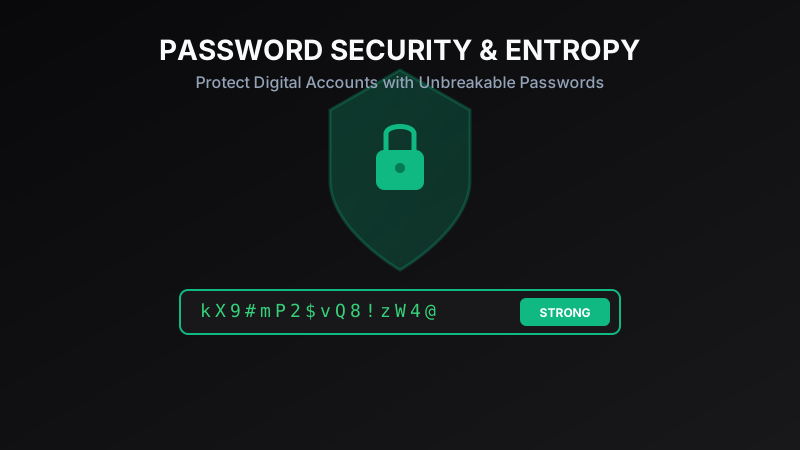
Length beats complexity every time. A 16-character password combining lowercase letters, uppercase letters, numbers, and special symbols possesses exponential mathematical entropy compared to a short complex password. Increasing password length from 8 to 16 characters turns cracking time from seconds into millions of years.
Pro Tip:
Aim for passwords with at least 14 to 16 characters containing a balanced mix of random symbols and numbers.
Common Password Mistakes to Avoid
Reusing the same master password across multiple online platforms is a top vulnerability. If a single service suffers a data breach, hackers immediately test those leaked credentials against banking, email, and social accounts.
Entropy, Length, and Character Diversity
Information entropy measures password randomness in bits. Passwords with over 70 bits of entropy are virtually immune to modern offline dictionary attacks. Using diverse character sets prevents predictable pattern analysis.
Generating Secure Passwords Safely
Relying on human memory to invent truly random passwords is counterproductive because human brains naturally lean into predictable patterns. Using cryptographically secure random number generators guarantees zero bias and maximum entropy.
Ready to test these tools right now?
ToolRays provides fast, free, privacy-focused browser tools. No sign-up required.